
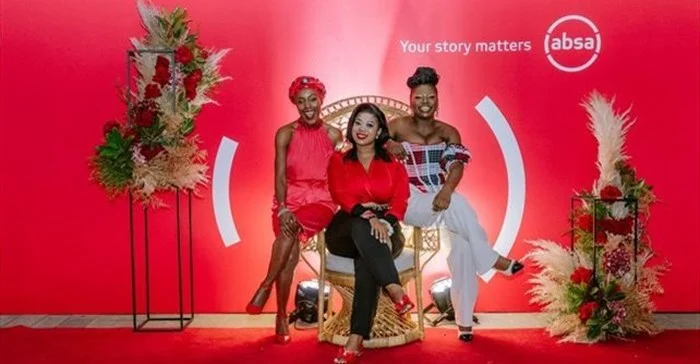
As South Africa approaches Women’s Month, the familiar rhythm begins: campaigns are launched, stories are told, and we celebrate the resilience and achievements of women across the country.
This year, initiatives like Absa’s “In My Story” campaign signal something important—a recognition that women’s voices, journeys, and lived experiences matter. Storytelling has power. It inspires, it connects, and it humanises the entrepreneurial journey.
But inspiration, on its own, does not build businesses.
If we are honest, South Africa does not suffer from a lack of awareness about women’s potential. What we face is a far more urgent challenge: a gap between visibility and economic empowerment.
The question we should be asking this Women’s Month is simple—and uncomfortable:
Are we amplifying women’s stories, or are we funding their futures?
The Limits of Celebration
Campaigns that spotlight women’s journeys play a critical role in shifting narratives. They challenge stereotypes and create representation where it has long been absent.
But representation without resource allocation risks becoming symbolic.
A woman entrepreneur does not scale her business on visibility alone. She needs:
- Access to capital that understands her context
- Financial products designed for growth, not survival
- Networks that open markets, not just conversations
- Institutional backing that reduces, rather than reinforces, systemic barriers
This is where a financial institution like Absa holds immense power—not just as a storyteller, but as a market maker.
From “In My Story” to “In My Strategy”
Absa’s campaign signals an important shift toward recognising women’s narratives. The next step is to embed those narratives into strategy—where real economic transformation happens.
What would it look like if Absa fully leaned into this moment?
1. Intentional Capital Deployment
Women entrepreneurs consistently face disproportionate barriers to funding. Absa has the opportunity to lead by:
- Creating dedicated funding vehicles for women-led SMEs
- Introducing flexible financing models that account for non-traditional collateral
- Scaling blended finance solutions that reduce risk for first-time women founders
This is not about preferential treatment—it’s about correcting structural imbalance.
2. Designing for the Real Entrepreneur
Too often, financial products are built around idealised business models that exclude informal or early-stage enterprises—where many women operate.
Absa can flip this by:
- Designing products that meet women where they are, not where the system expects them to be
- Supporting transitions from informal to formal business structures
- Embedding financial literacy and advisory into every funding journey
3. Building Ecosystems, Not Campaigns
A campaign lasts a season. An ecosystem creates generational impact.
Absa can extend its influence by:
- Partnering with incubators, accelerators, and platforms that support women entrepreneurs
- Facilitating procurement linkages between corporates and women-led SMEs
- Creating mentorship pipelines that connect emerging founders with established business leaders
In doing so, the bank shifts from being a participant in the conversation to an architect of opportunity.
Flipping the Narrative: From Tribute to Transformation
For decades, Women’s Month in South Africa has been rooted in remembrance—honouring the bravery of those who marched in 1956 and the progress that followed.
But honouring legacy should not mean standing still.
Flipping the narrative means redefining what August represents:
- Not just a celebration of past achievements, but a commitment to future outcomes
- Not just storytelling, but scale-building
- Not just visibility, but viability
It means asking harder questions:
- How many women-led businesses were funded this month?
- How many scaled beyond survival into sustainable growth?
- What systemic barriers were removed—not discussed?
A Defining Role for Absa
Absa is not just another financial institution. It is a major player in shaping South Africa’s economic landscape.
With that influence comes responsibility—and opportunity.
By aligning its storytelling with tangible financial action, Absa can redefine what corporate leadership looks like in the context of women’s empowerment. It can set a precedent for the entire financial sector to follow.
Because ultimately, the true measure of empowerment is not in how beautifully stories are told—but in how many women are enabled to build, scale, and sustain businesses that transform communities.
The Moment is Now
This Women’s Month, South Africa does not need more applause.
It needs investment. It needs intention. It needs institutions willing to move beyond narrative into action.
Absa has already started telling the story.
Now it must help write the next chapter—one where women entrepreneurs are not just seen and heard, but funded, supported, and unstoppable.